

 Français
 Deutsch
 Italiano
 Português
 Español
 русский
  Việt Nam
 عربي
عربي  Türkçe
 日本語
日本語 한국어
한국어Why Choose Us
Focus on R&D
We strive to innovate for the benefit of our customers and make technological contributions to the happiness and development of mankind.
Quality Ensure
We strive to create value for customers by continuously improving the cost-effectiveness of our products.
One-stop Solution
We are committed to providing eco-friendly and sustainable Glamping Tent solutions to our clients.
After-sales service
We provide excellent customer support services to ensure that our clients are fully satisfied with our Glamping Tent products.
What is Tent
A tent is a portable shelter made of fabric or other materials supported by poles and ropes. It is typically used for camping or outdoor activities and provides a temporary living space. Tents come in different sizes, shapes, and materials, and their designs vary depending on the intended use and environment. Some tents may have features like ventilation windows, multiple rooms, vestibules, and rainflies to provide added protection from the elements.
-
Waterproof Glamping Yurt Tent
This is a Waterproof Glamping Yurt Tent.It is suitable for many people to use for outdoor camping.Add to Inquiry -
Luxury Safari Tent Glamping
This is a Luxury Safari Tent Glamping.It is also a hexagonal fully automatic tent. This tent is aAdd to Inquiry -
Cotton Canvas Bell Tent Glamping
This is a Cotton Canvas Bell Tent Glamping.It is a spiritual home for you and your family andAdd to Inquiry -
Luxury Indian Glamping Tent
This is a Luxury Indian Glamping Tent.It can accommodate up to 4 people. It is made of high-qualityAdd to Inquiry -
Inflatable Camping Glamping Tent
This is a Inflatable Camping Glamping Tent.It is our sanctuary in the mountains, in the uncharted,Add to Inquiry -
Luxury Family Glamping Tent
This is a Luxury Family Glamping Tent.It's durable, warm and breathable and comes in a variety ofAdd to Inquiry
Advantages of Tent
Cost-effective
Tents are a more affordable alternative to traditional lodging, especially for short camping trips.
Flexibility
Tents give you the freedom to pitch your shelter anywhere, either in the woods, on a beach, or in a national park.
Easy to set up
Most tents can be easily set up in minutes with minimal effort.
Eco-friendly
Tents have a minimal impact on the environment, and most are made of recyclable materials.
Comfortable
With advances in technology, tents now come equipped with comfortable sleeping accommodations, such as air mattresses or cots.
Close to nature
Tents provide a closer connection to nature and the great outdoors, which can be a refreshing break from the hustle and bustle of everyday life.
Adventure
Camping in a tent offers a sense of adventuring and exploration, which can be exciting and invigorating.
Personalized experience
Tents give you the option to personalize your camping experience according to your camping needs and preferences.
Outdoor activities
Tents offer a great base from which to explore and engage in outdoor activities like hiking, fishing, and kayaking.
Nylon
A lightweight, durable, and water-resistant material that's commonly used for backpacking tents.
Polyester
A strong and durable material that's also resistant to UV rays and water.
Canvas
A heavy-duty, water-resistant, and breathable material that's commonly used for family camping tents.
Mesh
A lightweight and breathable material that's commonly used for the tent's windows and doors.
Vinyl
A heavy-duty, waterproof and fire retardant material that's commonly used in all-weather tents.
Gore-Tex
A breathable, waterproof and windproof material that used in high-end mountaineering tents.
Dome Tent
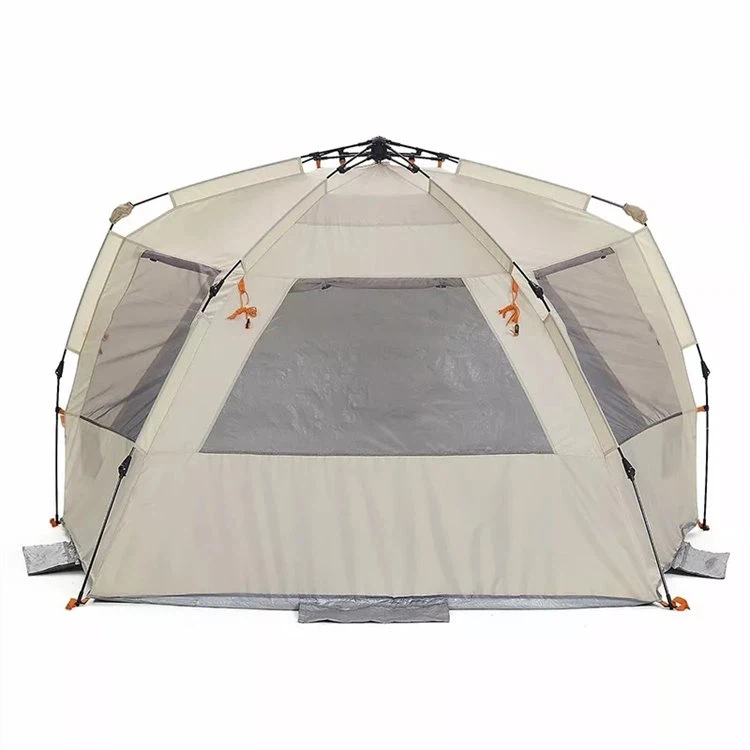
The dome tent is the most common design today. It has two flexible tent poles that cross in the center and are anchored to the corners of the tent with stakes, creating a dome shape that makes this tent easily distinguishable from other types. Dome tents come in a range of different sizes, with capacity ranging from a single person up to about eight people, making it an option for both backpacking and car camping, and for a solo camper or a family camping.
A-Frame Tent
Formerly very popular with campers due to its simple design, the A-frame tent (also known as the Ridge tent) looks like a capital A, as its name suggests. Originally made of canvas with metal or wooden poles, modern options of this tent are composed of lightweight fabric such as nylon and polyester and have aluminum poles. This tent is easy to set up and surprisingly stable, but it is heavy, bulky when packed, and lacks headroom.
Multi-Room Tent
The best option for large families with kids, the multi-room tent is closer to a house than a traditional tent. The primary advantage of this type of tent is privacy, created by room dividers. The multiple rooms also offer gear storage.
Backpacking Tent
If a multi-day hike or a long-distance trek to your campsite from the car is to be expected, a lightweight tent or an ultralight tent is the best choice. Generally, backpacking tents are smaller than other options and may have a significantly lighter packaged weight and an extremely light minimum trail weight, since hikers may be carrying them for many miles into the backcountry in or attached to their backpack. Their design tends to value small size and their material quality tends to directly impact the price point. Since backpacking tents typically have fewer poles, a small packed size, a lower peak height, and limited square footage, they are usually one-person or two-person tents, but three-person and four-person backpacking tents do exist.
Geodesic and Semi-Geodesic Tents
These tents have all the advantages of a dome tent with increased support, durability, and stability. The poles of these tents cross many times, intersecting to form triangles along the tent top, giving it a lot of stability. They are better than dome tents at holding up in heavy rain or storms but are larger to pack and more challenging to pitch.
Pop-Up Tent
Relatively newer and also known as "instant" tents, pop-up tents are spring-loaded and pop into shape in just a few seconds. These tents are not meant for extreme weather conditions; there are better options for camping in inclement weather. Ease of use is the key perk with pop-up tents.
Tunnel Tent
Similar to a dome tent, but longer and more cylindrical, these tents tend to use guy ropes (ropes that go from attachment points on the outside of the tent to the ground for added stability) to pitch, meaning they are typically non-freestanding tents. They offer a great space-to-weight ratio and identical pole length, so you don’t need to worry about mixing up poles. The biggest issue is they must be pitched properly or else they may sag in the middle.
Inflatable Tent
Another newer design, these tents come with inflatable poles. This makes for an easy one-person setup, but the inflatable tent is heavier than other models and requires an air pump.
Teepee Tent
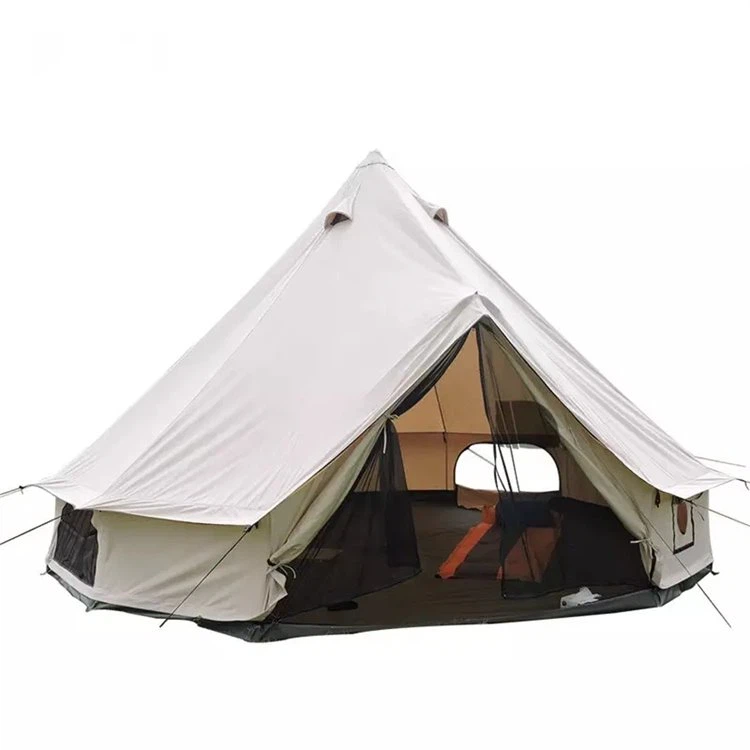
The teepee (or tipi) is the original, often cotton, canvas tent. Also referred to as a bell tent, this type of tent tends to have a high peak height, is easy to pitch, and only needs a single central pole. Traditionally, teepee tents were heavy and bulky, although the modern models can be lightweight and are similar to a minimalist, tarp-style set-up. These tents have a high pitching point (the point where the pole meets the tent, creating the peak of the tent), which allows for plenty of headspace when inside the tent, but may pose a challenge when setting up. Flooring is often not included.
Uses of Tent
Temporary shelter
We use tents as a temporary shelter and they are very useful because of its easy use methods. We use tents during our camping or for outdoor activities like camping, quick programs, or events.
It gives us shelter from different kinds of weather conditions. In the rainy season, a tent saves us from rain, and in winter it saves us from cold weather and cold wind. Not only in winter and cold weather, if we use a tent as a shelter, but it will also protect us in every weather condition and this is why tents are one of the popular shelter systems we use.
Privacy and rest
The use of a tent will give you total privacy because you will definitely need a bit of privacy to stay in camping. As it will not only protect you from outside weather but also allow you to take rest peacefully and sleep well. In camping, nighttime is a crucial time because if you sleep well at night, then the sound sleep will give you enough strength to move on and to survive camping in any condition.
Protects us from flying lnsects
One of the annoying problems we face in outdoor camping is the flying insects’ problems, especially in the nighttime. But if you use a tent for your camping, then it will give you a perfect environment to stay and sleep. Another thing you have to be sure to close the flap of your tent when you exit or enter. So the use of a tent in any outdoor program is essential for us.
Factors to Consider When Selecting Tent
01.Size
02.Style
03.Material
04.Seasonality
05.Ventilation
06.Setup and Portability
07.Cost
What are the Main Parts of Tent
Tent Body
The primary structure of a tent that provides shelter and protection from elements.
Tent Poles
These are the rigid poles that give shape and structure to the tent. They can be made of aluminum, fiberglass, or other materials.
Rainfly
This is an additional waterproof layer that fits over the tent body to protect against rain and wind.
Guy Lines
These are ropes that attach to the tent and are anchored to the ground. They add stability and help to keep the tent in place during strong winds.
Stakes
These are long metal pegs that are used to secure the tent to the ground.
Tent Doors
These are the entrances to the tent and can be zippered or have other types of closures.
Windows and Vents
These are openings in the tent that provide ventilation and light.
Footprint
This is a ground cloth that is placed under the tent to protect it from sharp rocks and prevent moisture from seeping in from below.
Interior Pockets
These are storage pockets located inside the tent to hold small items.
Vestibule
This is an additional covered space attached to the tent that provides extra storage for gear or a place to cook.
Precautions for the Use of Tent
Choose a safe and level ground for pitching the tent.
01
Ensure that the tent is secured to the ground with pegs or stakes and guylines.
02
Keep the tent at a safe distance from open flames or heat sources.
03
Be cautious when using candles or lanterns inside the tent to avoid the risk of fire.
04
Ventilate the tent properly to prevent the buildup of condensation and carbon monoxide.
05
Use caution when camping in areas with high winds, as the tent may become unstable and pose a risk of injury.
06
Keep the tent entrance closed to prevent insects and wildlife from entering.
07
Avoid storing food or any other items with strong odors inside the tent, as this may attract wildlife.
08
Never smoke inside the tent, as this can pose a serious fire hazard.
09
Always follow manufacturer instructions for setting up and using the tent.
10
How to Maintain Tent
Let the tent dry
Before storing the tent, make sure it is completely dry to prevent the growth of mold and mildew.
Remove dirt and debris
Brush off dirt and debris from the tent after each use. Use a soft-bristled brush and avoid scrubbing too hard to prevent damaging the fabric.
Clean the tent
Use a mild soap and water solution to clean the tent. Rinse thoroughly and let it dry completely before storing.
Clean the tent
Use a mild soap and water solution to clean the tent. Rinse thoroughly and let it dry completely before storing.
Repair damages
Check the tent for any damages or holes and repair them before storing. This will prevent any further damage and extend the life of the tent.
Avoid using harsh chemicals
Do not use bleach or harsh chemicals to clean the tent as it can damage the fabric. Stick to mild soap and water solution.
Use a footprint
Using a footprint under the tent can help protect the bottom from abrasions and sharp objects.
Avoid setting up the tent on rough surfaces
Setting up the tent on rough surfaces can cause damage to the tent fabric and poles. Find a level and smooth surface to set up the tent.
What Details Should Be Paid Attention to When Setting up and Dismantling a Tent?
Confirm the wind direction: When setting up a tent, you should know the wind direction of the day to prevent the tent from being blown over or overturned by the wind. At the same time, in order to prevent rainwater from infiltrating, the openings of the tent should avoid facing the wind or rainwater.
Install ground nails: The tent should be erected on a stable ground. If the ground is uneven or soft, it will cause the tent to tilt or collapse. Therefore, setting up ground nails is one of the key steps in setting up a tent. The ground nails should be driven at the stress-bearing points of the tent and not on soft soil to prevent the ground nails from sinking into the soil.
Tighten the anchor ropes: The tent needs anchor ropes to maintain its shape and stability. The fixing ropes should be tightened so that all corners of the tent are at right angles to the ground nails so that the tent remains stable.
Ensure ventilation: Keep the tent ventilated to avoid stuffiness. If the weather is hot, open a vent on the top of the tent to allow air to circulate.
Waterproofing: If the tent is likely to be exposed to water, waterproofing should be done first to prevent the tent from being penetrated by water. You can apply a layer of waterproofing agent to the outside of the tent or use a waterproof tent.
Fold in time: When disassembling the tent, fold it in time to avoid damage caused by long-term exposure to wind and rain. At the same time, the ground nails and fixing ropes should be put away before folding to avoid losing them or causing safety hazards.
Check accessories: When erecting and dismantling the tent, pay attention to check all accessories, such as ground nails, fixed ropes, tent poles, etc., to ensure that they are intact so that they can be replaced or repaired in time if necessary.
How Is the Interior Layout of the Tent Arranged?
Determine tent size and number of people: Choose the appropriate tent size based on the number of people camping and their needs.
Plan the space: Plan the space in the tent reasonably according to the functions and needs of each area in the tent. Usually includes seating areas, storage areas and foyer areas.
Arrange the foyer area: The foyer is the entrance to the tent and also the place where equipment is placed. Items such as shoes, backpacks and umbrellas can be placed in the foyer area. If your tent has multiple doors, consider placing a small storage space or hook near each door to make it easier to store items.
Set up storage areas: Storage areas can be used to place items such as food, fuel, and spare equipment. If the tent has multiple inner tents, consider setting up multiple partitions between the inner tents to store items in categories. At the same time, the storage area should be placed in the center of the tent for easy access.
Arrange the rest area: The rest area is one of the most important areas in the tent and should be chosen in the most comfortable and safest location in the tent. If your tent has multiple inner tents, consider using inner tents for partitioning to better protect privacy and warmth. Items such as sleeping bags, pillows and blankets can be placed in the seating area to provide a comfortable sleeping environment.
Consider ventilation and lighting: Ventilation and lighting in your tent are also important. When choosing a tent, consider choosing one with vents or skylights for ventilation and lighting. At the same time, when setting up a tent, you can also choose to place items such as curtains or anti-mosquito nets at the vents or skylights to enhance ventilation and anti-mosquito effects.
How to Choose the Material and Quality of Tent?
Tent weight
For travelers who need to hike for a long time, the weight of the tent is an important consideration. A lighter tent can reduce the burden and make travel easier. Therefore, when choosing a tent, it is recommended to choose a lightweight product, but not at the expense of durability and reliability.
Tent functions
Different types of tents have different functions and characteristics. For example, some tents are suitable for camping in the mountains, while others are suitable for camping on the beach. When choosing a tent, you need to choose the right product based on your needs and camping environment.
Tent material
Tent materials usually include nylon, polyester, etc. These materials are waterproof and durable. Some high-end tents will also use higher-grade materials, such as wear-resistant and tear-resistant. When choosing a tent, you need to choose the right material based on your needs and budget.
Tent quality
Quality is one of the factors that must be considered when choosing a tent. High-quality tents are usually made of better materials and workmanship, and can provide better waterproofing, durability and other properties. Therefore, when purchasing a tent, it is recommended to choose a well-known brand and carefully check the quality and workmanship of the product.
Tent Size
Tent size is another important consideration. If the tent is too small, it may feel cramped and uncomfortable; if the tent is too large, it will add weight and cost. Therefore, when choosing a tent, you need to choose the right size based on your needs and camping style.
Our Factory
We not only produce outdoor equipment by ourselves, but also cooperate with 5 other top outdoor equipment factories in the industry in China to produce our high-quality camping tents, camping furniture, sleeping bags, hammocks and outdoor lighting products. We are committed to providing the best quality and cheap outdoor products, and we will screen and invite other excellent factories to join our production team in the future.
The factories who cooperate with us have stable quality, high cost performance, prompt delivery, honesty and trustworthiness, and convenient service. Our production team is equipped with advanced production equipment, skilled operators and professional technicians to complete the production process. With these supply resources, we have built a number of stable and reliable production and supply bases in the past few years.
YekaSport has several professional buyers and the entire procurement team is equipped with 8 QCs to ensure that the product qualification rate reaches 99.99%.
We have professional salesmen and five-star customer service team to provide customers with one-stop service. All orders will be 100% executed from start to finish.
FAQ
We're well-known as one of the leading tent manufacturers and suppliers in China. Please feel free to buy or wholesale high quality tent at competitive price from our factory. For quotation, contact us now.
all weather camping hammock, two person beach tent, large luxury camping tent